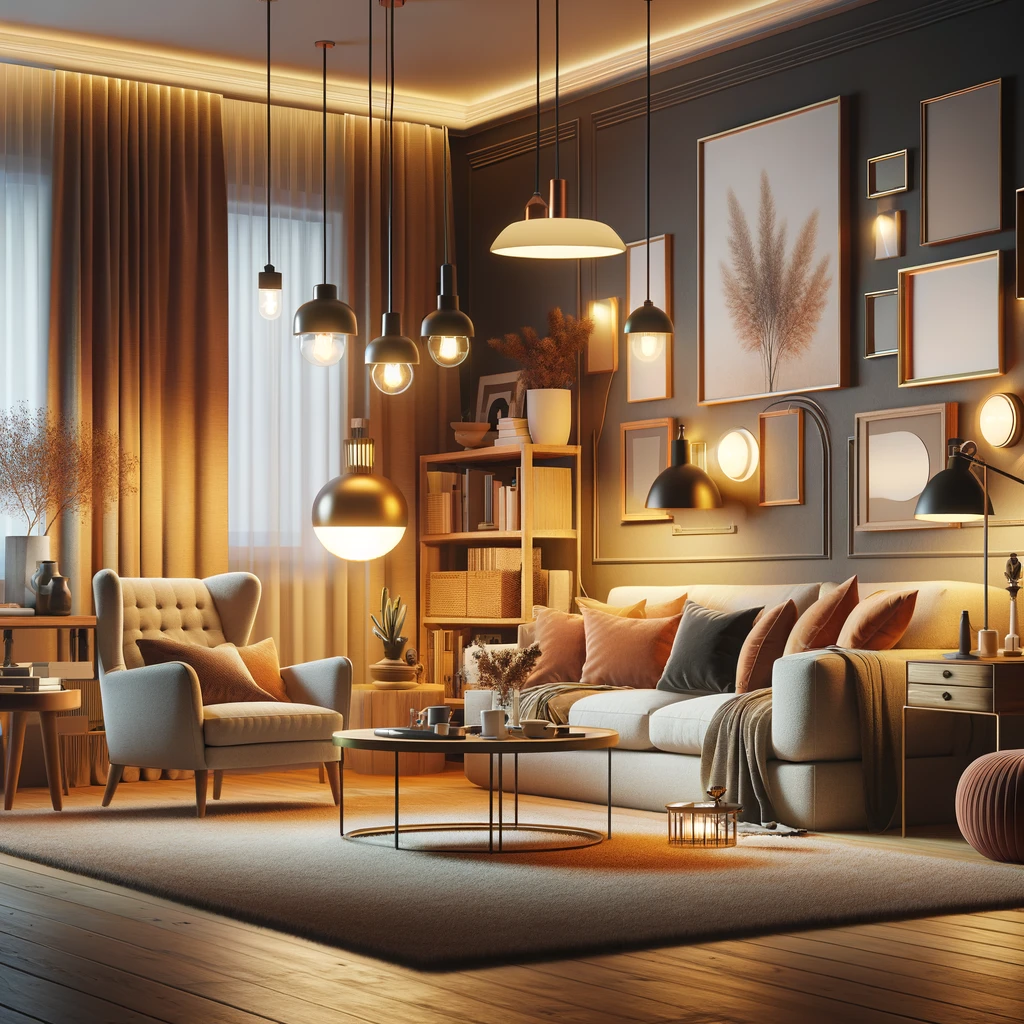
In the realm of interior design, lighting plays a pivotal role in setting the ambiance, functionality, and aesthetic appeal of a space. Understanding the three main types of lighting fixtures—ambient, task, and accent—can transform any room from mundane to magnificent. This blog explores these lighting fixtures, their pros and cons, installation tips, cost considerations, and more, ensuring you make an informed decision to brighten your home or workspace.
Ambient Lighting: The Foundation of Any Lighting Plan
Ambient lighting, often referred to as general lighting, provides a uniform level of illumination throughout a space. It’s the foundation upon which additional lighting layers are added.
Pros:
- Ensures sufficient visibility and safety.
- Creates a welcoming atmosphere in a room.
Cons:
- May not be sufficient for tasks requiring focused light.
- Can be too bland if used alone.
Installation Tips:
- Use a mix of ceiling fixtures, chandeliers, or recessed lights.
- Consider dimmers to adjust the light intensity according to the time of day or mood.
Cost Considerations: Ambient lighting fixtures range widely in price, depending on style and complexity. Basic ceiling-mounted fixtures can be quite affordable, while designer chandeliers may require a significant investment.
Task Lighting: Enhancing Functionality and Focus
Task lighting focuses on specific areas to provide illumination for activities like reading, cooking, or working.
Pros:
- Reduces eye strain by providing directed light.
- Enhances productivity and precision in tasks.
Cons:
- Incorrect placement can cause glare and shadows.
- May clash with the room’s aesthetic if not chosen carefully.
Recommended Tools:
- Adjustable desk lamps, under-cabinet lights, or pendant lighting.
- Ensure the light source is close to the work area without obstructing the task.
Cost Insights: Task lighting fixtures are generally moderate in price. LED desk lamps and under-cabinet lighting strips are cost-effective options that also offer energy efficiency.
Accent Lighting: Adding Drama and Depth
Accent lighting is used to highlight architectural features, artwork, or important objects within a space, adding drama and visual interest.
Pros:
- Creates focal points in a room.
- Can add depth and dimension to a space.
Cons:
- May require additional fixtures to balance the overall lighting scheme.
- Overuse can create a cluttered or disjointed aesthetic.
Installation Tricks:
- Use directional spotlights, wall-mounted fixtures, or track lighting.
- Position the light to focus on the intended feature without causing unwanted shadows.
Price Range: Accent lighting can vary in cost, depending on the sophistication of the setup. Simple track lighting systems are budget-friendly, while custom-designed spotlighting may be pricier.
Comparisons, Tips & Tricks, FAQs, and Future Considerations
When choosing lighting fixtures, consider the room’s function, the mood you wish to create, and the existing decor. Combining all three types of lighting fixtures allows for versatility and adaptability in any space. LED bulbs are recommended for their energy efficiency and longevity, offering savings in the long run.
FAQs:
- Q: How do I balance the three types of lighting in a room? A: Start with ambient lighting as your base, add task lighting for specific activities, and then introduce accent lighting to highlight features.
- Q: Can I install these fixtures myself? A: While some fixtures are DIY-friendly, tasks involving electrical wiring should be handled by a professional.
Updates and Future Considerations: Advancements in smart lighting technology allow for greater control over lighting levels, colors, and schedules, promising more personalized and energy-efficient lighting solutions in the future.
Remember, the right lighting can significantly enhance the comfort, functionality, and aesthetics of your space. Explore various fixtures, and don’t hesitate to experiment with different combinations to find what works best for your needs.