Changing a light bulb might seem like a simple task, but it’s essential to do it correctly to ensure safety and proper functioning. This guide will walk you through the process, highlight the pros and cons, recommend tools, and offer tips and tricks. Whether you’re a first-timer or need a refresher, this guide will help you successfully change a light bulb.
Pros
Changing a light bulb has several advantages:
- Cost-Effective Maintenance: Replacing a light bulb yourself saves money on electrician fees.
- Immediate Results: You can instantly restore light to a dark area.
- Basic Skill: It’s a basic home maintenance skill that everyone should know.
- Convenience: No need to wait for professional help; you can change it whenever needed.
- Energy Efficiency: Upgrading to LED bulbs can reduce your energy consumption.
Learning to change a light bulb empowers you to handle minor home repairs efficiently. It’s a straightforward process that offers immediate benefits, such as improved lighting and energy savings. Additionally, knowing how to change a light bulb can prevent extended periods without light, especially in crucial areas like kitchens and bathrooms.
Cons
Despite its simplicity, changing a light bulb can have some drawbacks:
- Safety Risks: Improper handling can lead to electric shocks or broken bulbs.
- Wrong Bulb Choice: Using the wrong type of bulb can cause fixture damage or reduce efficiency.
- Height Issues: Reaching high fixtures can be challenging and requires ladders.
- Delicate Task: Bulbs can be fragile and break if not handled with care.
- Environmental Concerns: Improper disposal of old bulbs can harm the environment.
Being aware of these cons can help you take the necessary precautions to ensure a safe and successful bulb replacement. Always turn off the power before starting, choose the correct bulb for your fixture, and handle the bulb with care to avoid accidents.
Recommended Tools for the Project
Having the right tools can make changing a light bulb easier and safer:
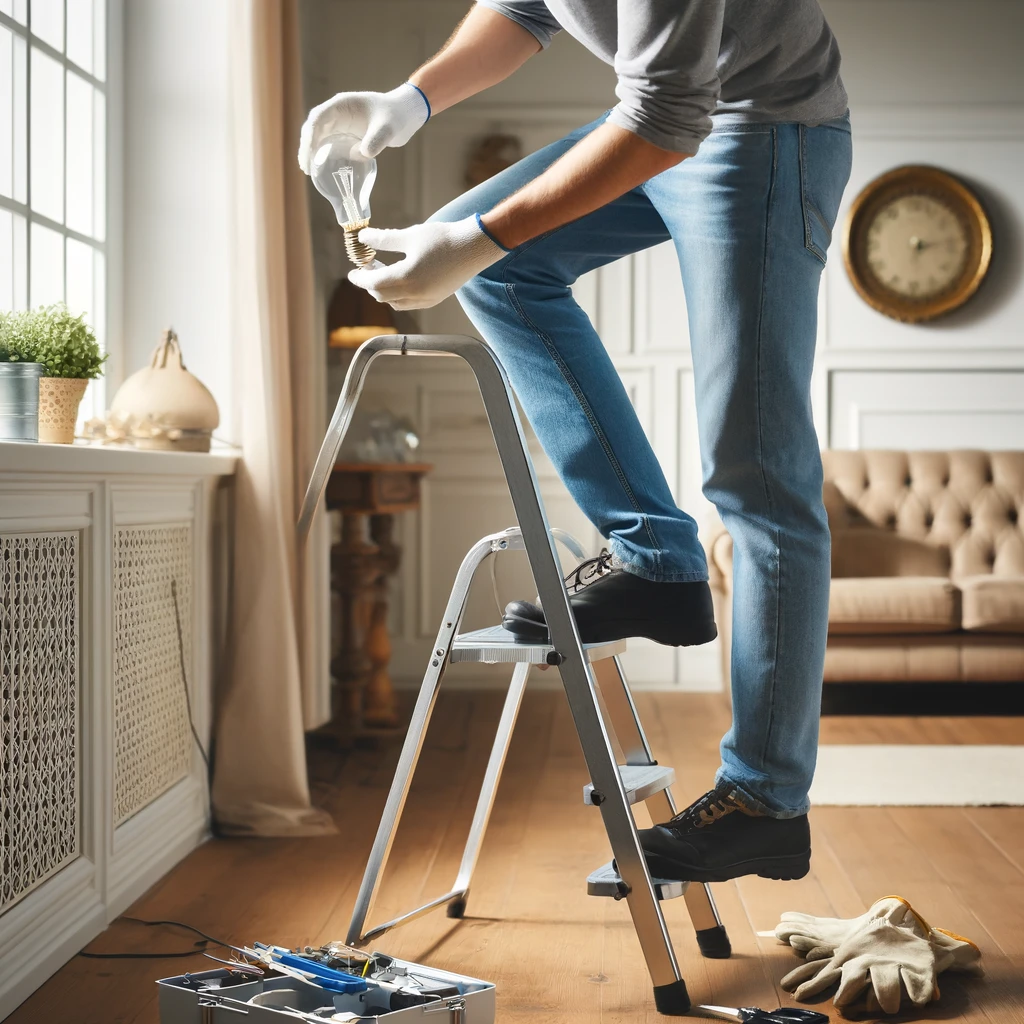
- Step Ladder: For reaching high fixtures.
- Gloves: To protect your hands from heat and broken glass.
- Safety Goggles: To protect your eyes from potential glass shards.
- Bulb Grabber Tool: For hard-to-reach or recessed fixtures.
- Multimeter: To ensure the power is off before starting.
Each of these tools serves a specific purpose, enhancing your safety and efficiency during the process. For instance, a step ladder provides stability, while gloves and goggles protect you from potential hazards. A bulb grabber tool can be particularly useful for recessed lighting, and a multimeter ensures you’re not working with live electricity.
Necessary Steps (1-10)
Follow these steps to change a light bulb safely and effectively:
- Turn Off the Power: Switch off the light and the corresponding circuit breaker.
- Let the Bulb Cool: Wait for the bulb to cool down if it was recently on.
- Use a Step Ladder: If the fixture is high, use a stable step ladder.
- Remove the Old Bulb: Gently twist or pull out the old bulb, depending on the type.
- Check the Socket: Ensure the socket is in good condition and free from debris.
- Select the Right Bulb: Choose a bulb with the correct wattage and type for your fixture.
- Install the New Bulb: Gently insert and twist the new bulb into place.
- Test the New Bulb: Turn the power back on and test the new bulb.
- Dispose of the Old Bulb: Dispose of the old bulb according to local regulations.
- Clean Up: Ensure the area is clean and all tools are stored away safely.
Each step is crucial for a successful light bulb replacement. Turning off the power and letting the bulb cool down are vital for safety, while selecting the right bulb ensures optimal performance.
Comparisons
When changing a light bulb, there are various types to consider:
- Incandescent Bulbs: Traditional but less energy-efficient.
- LED Bulbs: Long-lasting and energy-efficient, suitable for most fixtures.
- CFL Bulbs: Energy-efficient but contain small amounts of mercury.
- Halogen Bulbs: Brighter light, but can get very hot.
- Smart Bulbs: Offer advanced features like remote control and dimming.
Each type of bulb has its own set of advantages and disadvantages. LED bulbs, for instance, are the most energy-efficient and long-lasting, making them a popular choice for many households. On the other hand, incandescent bulbs are less efficient and have a shorter lifespan but are often cheaper and produce a warm light.
Tips & Tricks
Here are some tips and tricks to make changing a light bulb easier:
- Keep Spare Bulbs: Always have spare bulbs on hand to avoid inconvenience.
- Check the Wattage: Never exceed the recommended wattage for your fixture.
- Use a Soft Cloth: When handling halogen or LED bulbs, use a soft cloth to avoid oils from your hands affecting the bulb.
- Clean the Fixture: Take the opportunity to clean the fixture when changing the bulb.
- Label the Circuit Breaker: Clearly label the circuit breaker for the light fixture for future reference.
These tips can help you avoid common pitfalls and make the process smoother. For example, keeping spare bulbs ensures you’re always prepared, and cleaning the fixture improves light quality and fixture longevity.
FAQs
Q: Can I use any type of bulb in any fixture?
A: No, it’s important to use the correct type and wattage of the bulb specified for your fixture to ensure safety and efficiency.
Q: What should I do if a bulb breaks while changing it?
A: Turn off the power, wear gloves and safety goggles, and carefully clean up the broken glass. Use a damp cloth to pick up tiny shards and dispose of them safely.
Q: How do I dispose of old light bulbs?
A: Different types of bulbs have different disposal requirements. Check local regulations for proper disposal methods, especially for CFLs which contain mercury.
Q: Why is my new bulb flickering?
A: Flickering can be caused by several issues, including loose connections, incompatible dimmers, or faulty fixtures. Check the installation and consult a professional if the problem persists.
Q: How often should I change my light bulbs?
A: It depends on the type of bulb. LED bulbs can last up to 25,000 hours, while incandescent bulbs typically last around 1,000 hours.
Updates and Future Considerations
The lighting industry is constantly evolving with new technologies:
- Smart Bulbs: These offer features like remote control, color changing, and integration with smart home systems.
- Energy Efficiency Standards: Regulations are pushing for more energy-efficient lighting solutions.
- Eco-Friendly Options: More recyclable and environmentally friendly bulbs are being developed.
- Wireless Lighting: Innovations in wireless lighting technology are making installations easier and more flexible.
Keeping up with these updates can help you make informed decisions when purchasing new bulbs and fixtures. Smart bulbs, for instance, provide not only energy savings but also convenience and enhanced control over your home lighting.
Cost or Price
The cost of changing a light bulb varies depending on the type of bulb and tools required:
- Incandescent Bulbs: $1-$2 each, but need frequent replacement.
- LED Bulbs: $5-$20 each, with longer lifespan and energy savings.
- CFL Bulbs: $2-$5 each, with moderate lifespan and efficiency.
- Tools: A good quality step ladder and safety equipment may cost around $50-$100.
While LED bulbs have a higher upfront cost, they save money in the long run due to their longevity and energy efficiency. Investing in the right tools and safety equipment also ensures that you can change light bulbs safely and effectively whenever needed.
By following this guide, you can change a light bulb safely, efficiently, and with confidence. Remember to always prioritize safety and choose the right bulb for your fixture to ensure the best results.