Carpenter bees can be a significant nuisance, causing damage to wooden structures around your home. If you’ve noticed round holes and piles of sawdust, it’s crucial to address the issue promptly. Understanding how to handle carpenter bees effectively can save you time, money, and potential structural damage. In this comprehensive guide, we will explore the pros and cons of dealing with carpenter bees, the recommended tools, necessary steps for eradication, and various tips and tricks to keep these wood-boring insects at bay. Whether you’re dealing with a minor infestation or a major problem, this guide will equip you with the knowledge and strategies needed to handle carpenter bees successfully.
Pros
Dealing with carpenter bees can have several advantages if approached correctly. Here are some key benefits:
- Natural Pollinators: Carpenter bees play a crucial role in pollination. By handling them carefully, you can encourage their pollinating activities without the destructive behaviors.
- Reduced Structural Damage: Proper handling and prevention techniques can significantly reduce the risk of structural damage to your home.
- Eco-friendly Methods: Many methods to handle carpenter bees are environmentally friendly, ensuring the safety of other beneficial insects.
- Increased Home Value: Preventing and repairing carpenter bee damage can maintain or increase your home’s value.
- Personal Safety: Addressing a carpenter bee infestation promptly can prevent potential allergic reactions from stings.
Managing carpenter bees effectively can lead to a balanced approach where their pollinating benefits are harnessed while minimizing their destructive tendencies.
Cons
While there are benefits, handling carpenter bees also comes with its own set of challenges:
- Potential Damage: Despite efforts, some level of structural damage may still occur, especially if the infestation is extensive.
- Time-Consuming: Handling carpenter bees requires time and effort, from identifying infested areas to applying treatments and monitoring results.
- Costly Repairs: Repairing wood damage caused by carpenter bees can be expensive, especially if left unchecked for a long period.
- Chemical Use: Some effective treatments involve the use of chemicals, which may not be ideal for environmentally conscious individuals.
- Ongoing Maintenance: Even after initial handling, ongoing maintenance and monitoring are necessary to prevent future infestations.
Being aware of these drawbacks can help you prepare better and choose the most suitable methods for handling carpenter bees.
Recommended Tools for the Project
When dealing with carpenter bees, having the right tools can make the process more efficient and effective. Here are some recommended tools:
- Protective Gear: Ensure you have gloves, goggles, and a face mask to protect yourself from bee stings and chemical exposure.
- Insecticides: Use a specialized carpenter bee insecticide that is safe and effective.
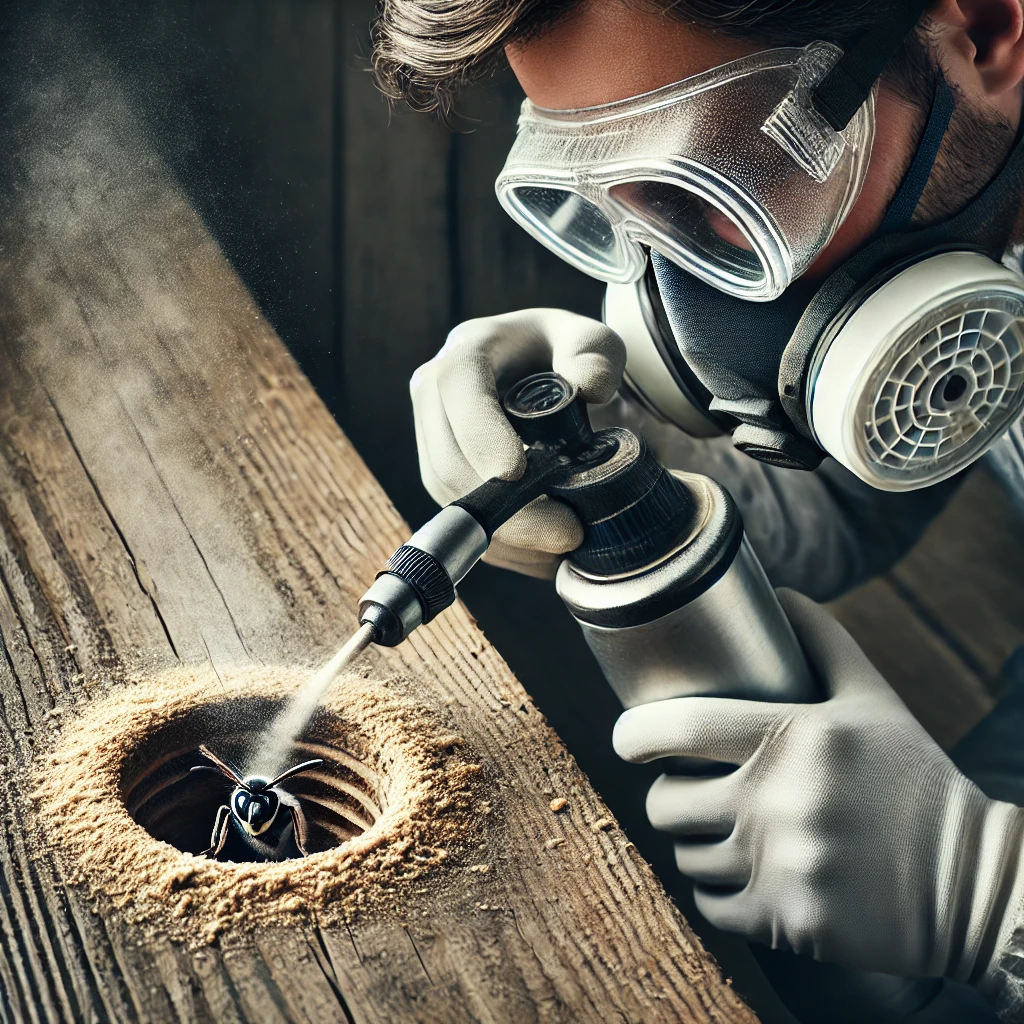
- Dust Applicator: This tool helps apply insecticidal dust into the bee tunnels.
- Wood Filler or Putty: Essential for sealing the tunnels after treatment.
- Sandpaper: Useful for smoothing out the filled holes and preparing surfaces for painting.
- Paint or Stain: Applying a fresh coat of paint or stain can deter bees from returning.
- Bee Traps: These can help catch bees and reduce the population around your home.
Having these tools on hand can streamline the process and ensure comprehensive handling of carpenter bees.
Necessary Steps
Handling carpenter bees involves several detailed steps. Follow this 10-step guide to effectively manage and prevent carpenter bee infestations:
- Identify Infested Areas: Inspect wooden structures around your home for signs of carpenter bee activity, such as round holes and sawdust.
- Apply Insecticide: Use a specialized insecticide to treat the bee tunnels. Apply it directly into the holes to ensure it reaches the bees.
- Wait and Observe: Allow the insecticide to work for a few days. Observe the treated areas for any remaining activity.
- Seal the Tunnels: Once you are confident the bees are eliminated, use wood filler or putty to seal the tunnels. This prevents other bees from reusing them.
- Sand the Area: Smooth out the filled holes with sandpaper to prepare the surface for painting.
- Paint or Stain: Apply a fresh coat of paint or stain to the treated areas. Bees are less likely to bore into painted or stained wood.
- Set Traps: Place carpenter bee traps around your home to catch any remaining bees and prevent future infestations.
- Monitor Regularly: Keep an eye on previously infested areas and other wooden structures for new signs of activity.
- Use Preventative Measures: Consider using chemical repellents or natural deterrents like citrus spray on vulnerable wood surfaces.
- Repair and Maintain: Regularly inspect and maintain wooden structures to keep them in good condition and less attractive to carpenter bees.
By following these steps, you can effectively handle carpenter bees and protect your home from damage.
Comparisons
Different methods for handling carpenter bees can vary in effectiveness, cost, and environmental impact. Here’s a comparison of some common approaches:
- Chemical Insecticides:
- Effectiveness: Highly effective at killing bees on contact.
- Cost: Moderate; requires purchase of insecticides and applicators.
- Environmental Impact: Can be harmful to other insects and the environment if not used properly.
- Natural Remedies:
- Effectiveness: Varies; may not be as immediately effective as chemicals.
- Cost: Low; uses common household items like citrus spray or essential oils.
- Environmental Impact: Minimal; safer for the environment and non-target species.
- Bee Traps:
- Effectiveness: Effective at capturing and reducing bee populations.
- Cost: Moderate; initial purchase of traps.
- Environmental Impact: Minimal; traps specifically target carpenter bees.
- Professional Extermination:
- Effectiveness: Very effective; professionals have expertise and tools.
- Cost: High; professional services can be expensive.
- Environmental Impact: Depends on the methods used by the exterminator.
Choosing the right method depends on your specific situation, budget, and environmental concerns.
Tips & Tricks
Here are some additional tips and tricks to make handling carpenter bees more effective:
- Regular Inspections: Conduct regular inspections of wooden structures to catch infestations early.
- Use Citrus Spray: Carpenter bees dislike citrus. Spray citrus oil on wood surfaces to deter them.
- Maintain Wood: Keep wooden structures well-maintained and painted or stained to make them less attractive to bees.
- Seal Cracks and Holes: Seal any cracks or holes in wood to prevent bees from entering.
- Install Bee Traps: Place bee traps around your property to reduce the bee population.
- Plant Bee-Friendly Flowers: Plant flowers that attract bees away from your home, encouraging them to pollinate without causing damage.
These tips and tricks can help you manage carpenter bees more effectively and prevent future infestations.
FAQs (Frequently Asked Questions)
Q: How can I identify carpenter bee activity? A: Look for round, smooth holes in wooden structures and piles of sawdust. Carpenter bees create these holes to nest.
Q: Are carpenter bees dangerous? A: Carpenter bees are generally not aggressive and rarely sting. However, their tunneling can cause significant structural damage.
Q: What should I do if I find a carpenter bee nest? A: Apply an insecticide to the nest, wait for the bees to die, and then seal the holes with wood filler.
Q: Can I use natural remedies to handle carpenter bees? A: Yes, natural remedies like citrus spray and essential oils can deter carpenter bees, but may not be as effective as chemical treatments.
Q: Should I call a professional exterminator? A: If the infestation is extensive or you’re uncomfortable handling it yourself, a professional exterminator can be a good option.
Updates and Future Considerations
As we continue to learn more about carpenter bees and their behavior, new methods and products are being developed to handle them more effectively. Keep an eye out for updates on:
- New Insecticides: Advances in safer, more effective insecticides.
- Eco-friendly Solutions: Development of more natural and environmentally friendly deterrents.
- Improved Traps: Innovations in bee traps for better capture rates.
- Research on Bee Behavior: Ongoing research into carpenter bee habits and preferences to improve prevention strategies.
Staying informed about these updates can help you better manage carpenter bees in the future.
Cost or Price
Handling carpenter bees can involve various costs depending on the methods you choose. Here’s a breakdown of potential expenses:
- Insecticides: $20-$50 for specialized carpenter bee insecticides.
- Bee Traps: $10-$30 per trap.
- Wood Filler: $5-$15 for a small tub.
- Paint or Stain: $20-$60 per gallon, depending on the quality.
- Professional Services: $150-$500, depending on the extent of the infestation and the services required.
Overall, the cost can range from minimal if you handle it yourself with basic supplies, to more significant if professional help is needed. Regular maintenance and preventative measures can help reduce long-term costs.